7 Advantages of a Traditional Thai House
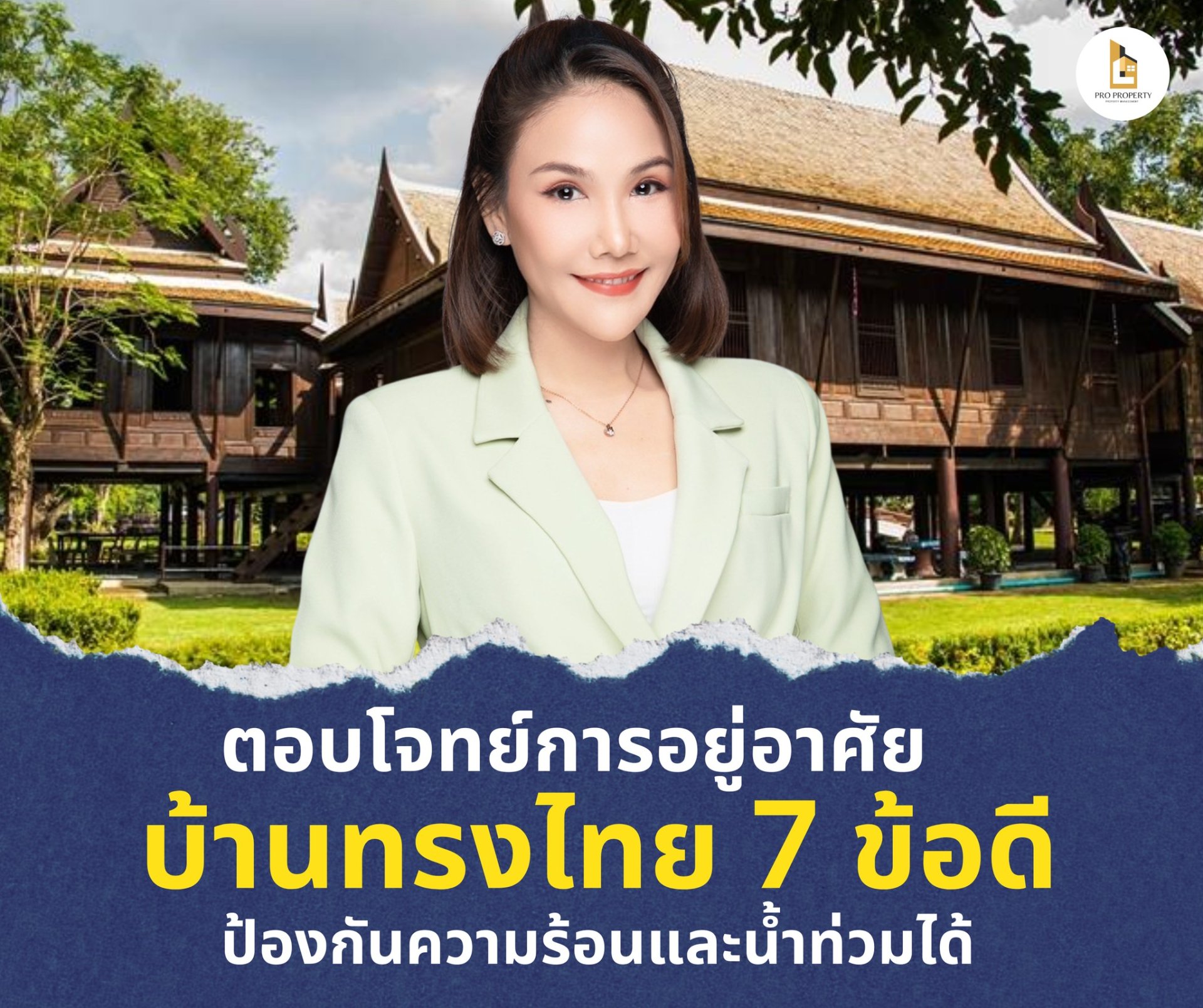
Traditional Thai houses are considered a unique architectural style. Although not as popular as other house styles today, many families still appreciate this style due to its distinctive design and representation of Thai culture.
Modern Thai house designs are being adapted to contemporary times, becoming more robust while retaining the functionality of the original Thai style.
A major advantage of traditional Thai houses is their affordability, as they are typically single-story. Furthermore, they are well-suited to Thailand's climate. Let's explore the advantages and suitability of traditional Thai houses to the Thai climate.
__________________________________________
Traditional Thai Houses and Gable Roofs for Excellent Heat Dissipation
Many wonder why traditional Thai houses are so suitable for Thailand's hot climate. Firstly, traditional Thai houses primarily use wood as their main construction material. Wood dissipates heat better than concrete, which retains heat more effectively.
Therefore, in extremely hot weather, wooden floors dissipate heat more efficiently, resulting in a cooler interior temperature. The high gable roof structure of traditional Thai houses, higher than other house styles, is another important factor that helps them cope with heat.
The airy space with high ceilings, at least 35 degrees or more according to the specifications of traditional Thai houses, allows the house to retain air and also allows for good ventilation.
In addition, at this height, the gable roof of a traditional Thai house acts as a heat insulator. Because occupants are far enough away from the roof, they hardly feel the heat. If a traditional Thai house is built with additional insulation or heat-reflective roof tiles, even without air conditioning, the heat radiation will be barely felt.
Besides the coolness inside a traditional Thai house, another obvious advantage is energy efficiency. Anyone who has seen a traditional Thai house will notice that many homes rarely use air conditioning. This is due to these advantages of the traditional Thai house design.
__________________________________________
7 Advantages of Traditional Thai House Designs
- Shape/Structure: The gable roof of a traditional Thai house is higher than other house styles.
- Ventilation: Allows the house to retain air and provides good ventilation.
- Energy Saving: Installing insulation or heat-reflective roof tiles reduces the need for air conditioning.
- Aesthetics: Offers a simple yet distinctive traditional Thai look.
- Construction: The structure is not complicated, making construction easy and cost-effective compared to other roof styles.
- Practicality: Provides good protection from sun and rain, but the correct roof angle must be chosen to prevent leaks.
- Popularity: A long-standing design that remains popular in both traditional and contemporary Thai houses.
__________________________________________
Traditional Thai House Designs: Protection Against Flooding and Pests During the Rainy Season
Thailand's Seasons: According to the Meteorological Department, the rainy season in Thailand begins around mid-May to mid-October. For traditional Thai houses, the biggest concern during the rainy season is the structural damage caused by the wood, particularly the moisture that can cause swelling. However, if a house chooses to use solid wood such as teak, rosewood, or mahogany, there's no need to worry about strength and durability; it can withstand all weather conditions.
But besides the structural materials mentioned, a key feature of traditional Thai houses that can protect the whole family from disasters is the raised foundation. Some traditional Thai houses even have a foundation higher than 2 meters.
The raised foundation has been a hallmark of traditional Thai houses for a long time. Its primary purpose is to provide a relaxing space for the family, allowing for good ventilation and the retention of fresh air.
Another advantage of the raised foundation is that in the event of flooding, belongings inside the house will not be damaged. This allows everyone in the house to live comfortably and safely, and also protects them from animals that may come with the floodwaters.
Those whose houses lack a raised foundation have to find ways to deal with these pests. But for traditional Thai houses, if flooding occurs, simply closing the doors and windows tightly will prevent pests from entering, whether insects or venomous creatures, because the height of the foundation prevents water from reaching the house.
__________________________________________
For those who don't like traditional Thai-style houses, you can look for land to build other styles of houses with raised foundations to protect against flooding. Or, if you don't want to invest in building yourself and are worried about budget overruns, try looking for a good location.
For new housing projects with heat-insulating technology and located in flood-prone areas, or even consider high-rise condominiums for smaller families, as flood safety is unpredictable.
Therefore, those considering expanding their living space must primarily consider the climate and environment within Thailand.
__________________________________________
Thank you for the valuable information from DD Property.