Marriage Equality Drives 4 Housing Trends
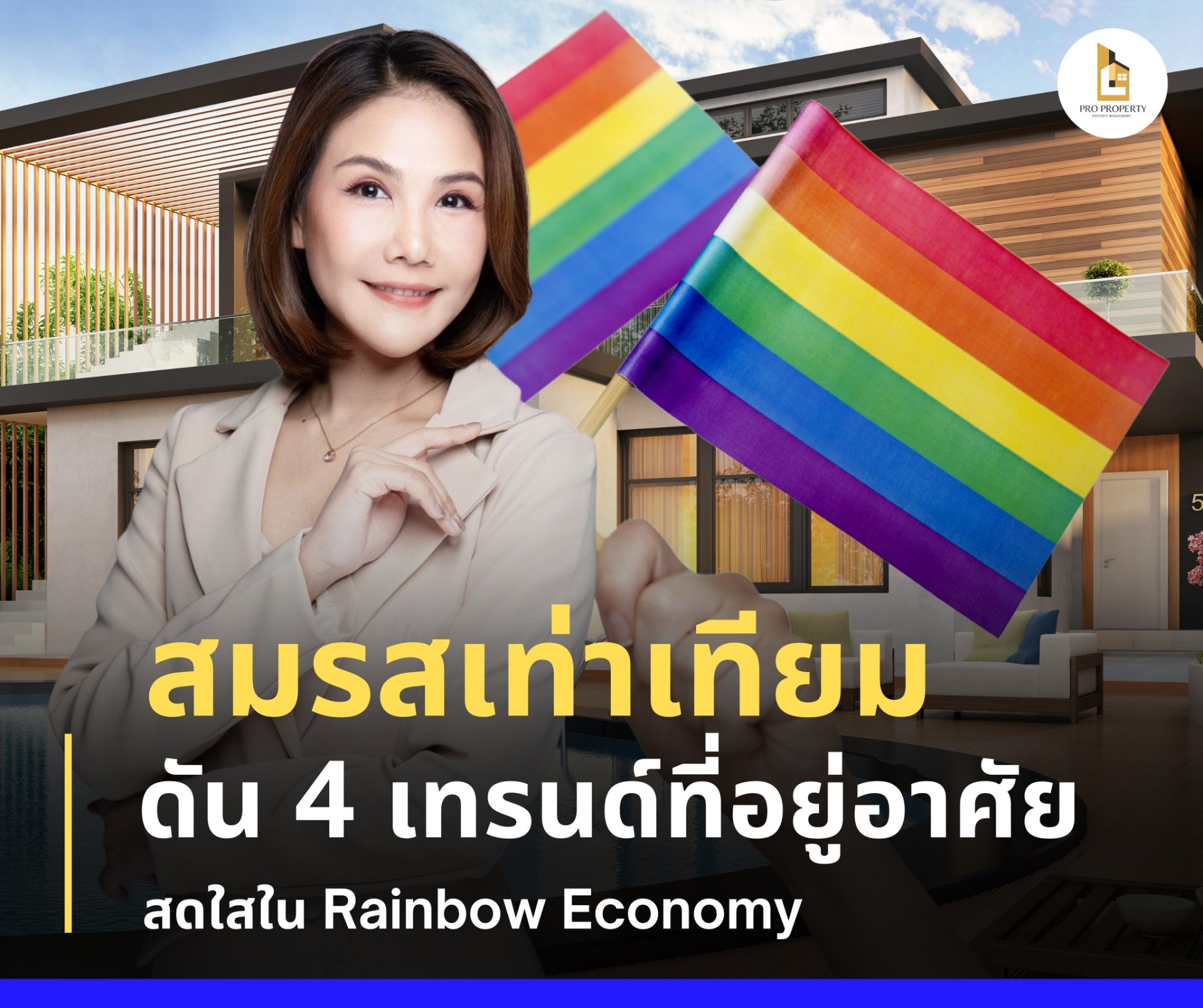
The LGBTQIAN+ community is a vital component driving the global economy, known as the Rainbow Economy. This is because LGBTQIAN+ individuals possess significant purchasing power and are willing to spend freely to enhance their personal happiness and lifestyle.
Thailand, in particular, is open and accepting of sexual diversity, as evidenced by the social momentum that pushed for the official implementation of the Amendment to the Civil and Commercial Code (No. 24) of 2024, or the Equal Marriage Act, on January 23, 2025. This reflects another dimension of creating an equal society.
A research report from the College of Management, Mahidol University (CMMU), titled "Love Wins Marketing: Decoding Marketing After the Equal Marriage Act," found that Thailand's LGBTQIAN+ consumer base numbers over 5.9 million people, or 9% of the total population. This makes them a new economic force that businesses should pay close attention to, especially in the real estate market.
Furthermore, 54% of this population group desire to own their own homes. Of these, 79.1% were interested in buying a detached house, and 20.9% chose to move in with their partners, with an average budget of 3-5 million baht and varying housing preferences. This reflects that housing needs remain a key factor for all ages and genders.
___________________________________________
How can LGBTQIAN+ couples manage their marital property?
In addition to the Equal Marriage Act allowing LGBTQIAN+ couples to legally register their marriages, it also comes with various rights that married couples are entitled to, including managing their marriage, assets/debts, and jointly managing marital property.
LGBTQIAN+ individuals should understand the management of marital real estate (according to the Civil and Commercial Code, Section 1474) and what needs to be done jointly.
The law allows married couples to agree on the form, method, conditions, and limitations regarding the management of their marital property that differ from what the law dictates, as they see fit. If no marital property management agreement is made between the couple, the property will be subject to further agreement upon termination of the marriage. Both parties must manage their jointly owned marital property and divide it equally according to the law.
Information from the Office of Justice Affairs reveals that Section 1476 of the Civil and Commercial Code specifies eight ways spouses can manage jointly owned marital property. Key issues related to real estate that should be noted include:
1. Management of property such as sale, exchange, conditional sale, lease-purchase, mortgage, mortgage release, or transfer of mortgage rights requires joint consent from both spouses.
2. Management of property rights, including easements, rights of residence, surface rights, usufruct, or encumbrances on real estate.
3. Leasing real estate for more than three years requires joint consent from both spouses. Failure to comply allows the spouse who does not consent to file a lawsuit for annulment. However, for leases less than three years, both spouses can manage the lease independently without the other spouse's consent.
4. Using marital property as collateral, except in cases where personal position is used, in which case joint consent is not required.
___________________________________________
(Thanks to DD Property for this valuable information.)